Growing tropical fruit trees indoors may seem tricky — but mango bonsai makes it possible. These mini trees blend bonsai beauty with fresh fruit rewards, thriving on sunny windowsills or patios, even in cold climates or small spaces. With the right care, you’ll harvest mangoes in just a few years.
But here’s what most guides won’t tell you: Not all mango varieties work for bonsai. One watering mistake can kill your tree in weeks. The secret? Master three things: choosing the right dwarf variety, nailing your watering schedule, and pruning at the right time.
This guide gives you step-by-step instructions that actually work — from picking the best container-friendly mango to fighting pests and diseases. Whether you’re a beginner or a seasoned bonsai grower, you’ll walk away knowing exactly how to grow a mango bonsai that looks stunning and produces fruit.
Let’s get started.
What is a Mango Bonsai?
A Mango Bonsai tree is a miniature version of a Mango tree, typically grown in a pot or container. It is a type of Bonsai tree that is becoming increasingly popular due to its attractive appearance, easy maintenance, and delicious fruit.
The Mango tree is native to South Asia and is a popular fruit tree worldwide. The Mango Bonsai tree can grow up to 2-3 feet tall and can be grown both indoors and outdoors.
Why Grow Mango Bonsai?
Growing a Mango Bonsai tree has several benefits:
Benefits at a Glance
- Space-efficient fruit production
- Aesthetic appeal and conversation starter
- Year-round indoor growing option
- Lower maintenance than full-size trees
- Educational hobby value
Who Should Grow Mango Bonsai?
- Apartment dwellers with limited space
- Tropical fruit enthusiasts in cold climates
- Bonsai hobbyists wanting to expand into fruiting trees
- Gardeners seeking a unique indoor plant
How to Grow a Mango Bonsai: Complete Step-by-Step Guide
Growing a Mango Bonsai tree requires some basic knowledge and skills. Here are the steps you should follow:
Step 1: Choose the Right Mango Variety for Bonsai
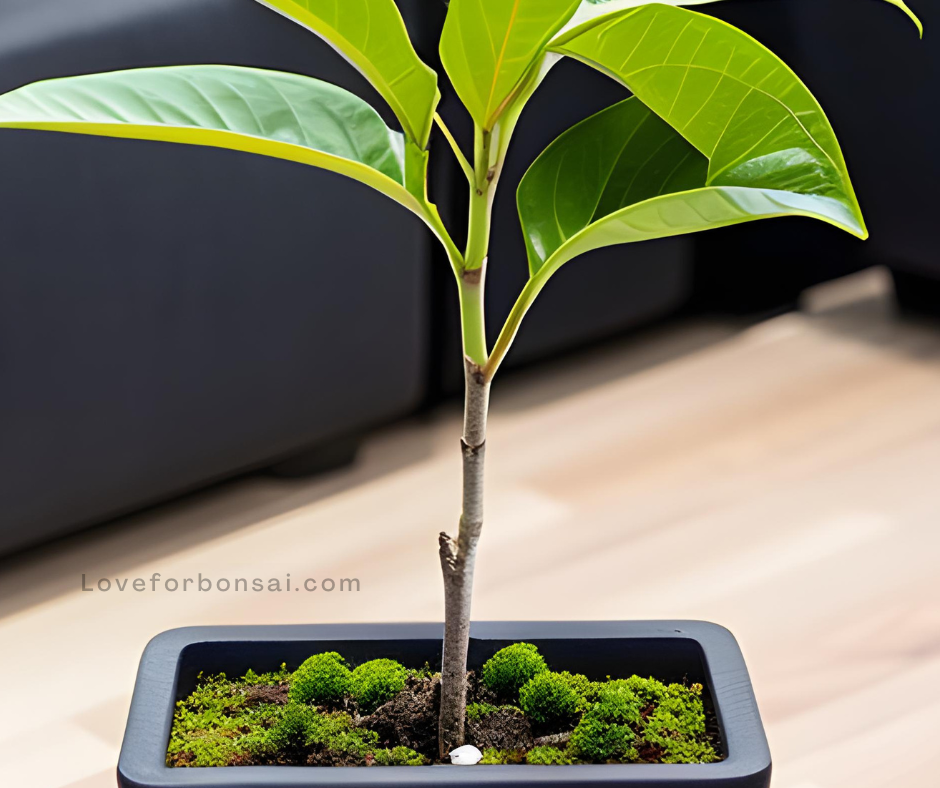
Not all mango varieties are suitable for bonsai cultivation. You need to choose a dwarf or semi-dwarf variety that can produce fruit in a small space.
Some of the best mango varieties for bonsai creation include Irwin, Nam Doc Mai, King Thai, Carrie, Coggeshall, Neelam, Glenn, and Amrapali. These varieties have small fruits, compact growth habits, and attractive foliage.
Best Mango Varieties for Bonsai (Comparison Table)
| Variety | Fruit Size | Growth Habit | Climate tolerance | Difficulty Level | Yield |
|---|---|---|---|---|---|
| Irwin | small | Compact | Moderate | Easy | High |
| Nam Doc Mai | Small | Compact | Tropical | Moderate | Moderate |
| King Thai | Small | Compact | Tropical | Moderate | High |
| Carrie | Small | Compact | Moderate | Easy | Moderate |
| Coggeshall | Small | Compact | Moderate | Easy | High |
| Neelam | Small | Compact | Tropical | Moderate | Moderate |
| Glenn | Small | Compact | Moderate | Moderate | High |
| Amrapali | Small | Compact | Moderate | Easy | High |
Why These Varieties Work (And Others Don’t)
- Compact growth habits
- Small fruit production
- Disease resistance
- Container-friendly root systems
Step 2: Select the Right Pot and Soil
Now, choose a pot that is large enough to accommodate the root system of your mango bonsai tree.
The pot should have drainage holes at the bottom and be made of ceramic or clay. The pot should be about 10 to 15 inches in diameter and 8 to 10 inches in depth.
Step 3: Plant Your Mango Bonsai (Two Methods)
You can either start your mango bonsai tree from a seedling or a graft.
A seedling is a young plant that grows from a seed. A graft is a branch or bud that is attached to another plant’s rootstock.
Grafting allows you to grow a specific variety of mango on a different rootstock that may be more resistant to diseases or pests.
Method A: Growing From Seed
Seed Selection and Preparation
- Choose a ripe, healthy mango fruit
- Extract the seed carefully
- Wash and remove all pulp and fibers
- Dry for 24 hours
Planting Instructions
- Fill the pot with 50/50 soil-sand mix
- Place the seed 1 inch below the soil surface
- Cover lightly with soil
- Water thoroughly
- Keep in a warm, sunny location
Germination Timeline
- Expected germination: 3-4 weeks
- First leaves appear: 6-8 weeks
- Ready for pruning: 3-4 months
Method B: Growing From a Graft (Faster Option)
Why Choose Grafting?
- Faster fruit production (1-2 years vs. 5+ years)
- Guaranteed variety
- Disease-resistant rootstock options
- More reliable fruiting
Grafting Steps
- Purchase a grafted mango plant from the nursery
- Verify healthy rootstock and scion
- Remove from the original pot
- Transplant to a bonsai pot with fresh soil
- Ensure the graft union sits above the soil line
- Water and place in shade for 3-5 days
Seedling vs. Graft: Quick Comparison
| Factor | Seed/Seedling | Grafting |
|---|---|---|
| Time to fruit | 5-7 years | 1-2 years |
| Cost | Low | High |
| Variety Guarantee | No | Yes |
| Difficulty | Easy | Moderate |
| Recommended for | Patient Beginners | Experienced Growers |
Where to Place Your Mango Bonsai?
Sunlight Requirements
Minimum: 6 Hours of Direct Sunlight Daily
- Best placement: South or west-facing window
- Indoor: Near an unobstructed window
- Outdoor: Full sun with afternoon shade in extreme heat
What Happens With Insufficient Light
- Weak growth and leggy branches
- No fruit production
- Increased pest susceptibility
- Pale or yellowing leaves
Temperature and Climate Control
Ideal Temperature Range:
60°F–85°F (15°C–29°C)
Winter Care (Cold Climates)
- Bring indoors before the first frost
- Place near a sunny window or under grow lights
- Maintain 60°F minimum
- Reduce watering frequency
Protection From Environmental Stress
- Avoid harsh winds
- Keep away from heating/cooling vents
- Protect from temperature fluctuations (>15°F swings)
Indoor vs. Outdoor Growing
Indoor Growing
- Pros: Climate control, year-round growth, pest management
- Cons: Light limitations, humidity challenges
- Best for: Cold climates, apartments
Outdoor Growing
- Pros: Natural sunlight, better air circulation, easier maintenance
- Cons: Weather exposure, pest pressure, seasonal dormancy
- Best for: Tropical/subtropical climates
How to Take Care of Your Mango Bonsai Tree
The Mango Bonsai tree requires regular care to keep it healthy and attractive. Here are some tips to keep in mind:
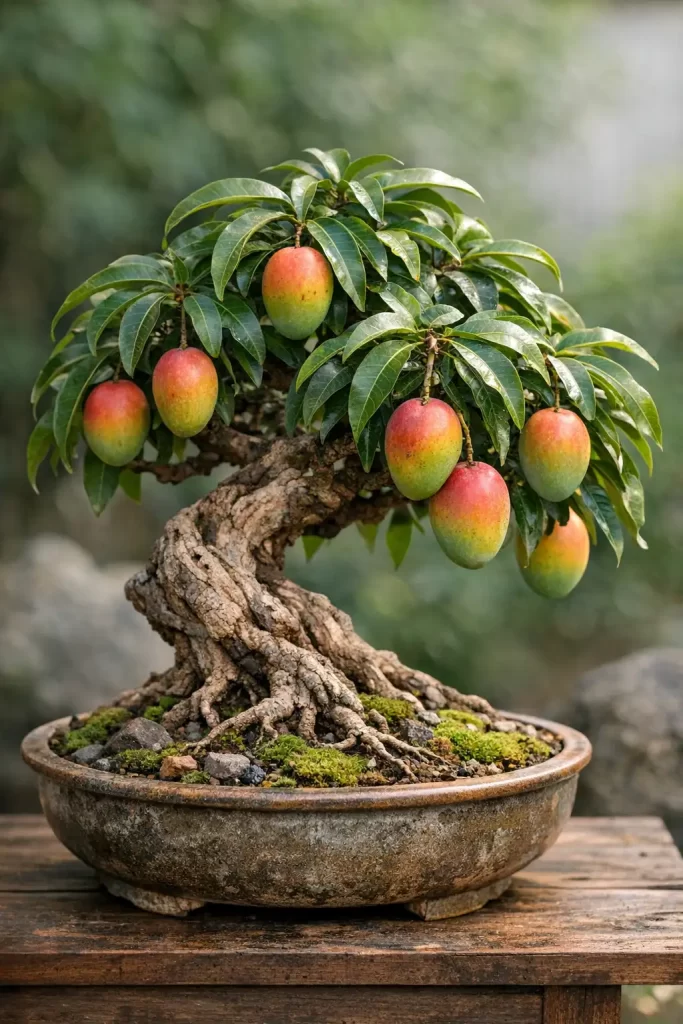
Watering: The Most Critical Factor
Watering Schedule
- Check soil daily: Water when the top 1 inch feels dry.
- Frequency: Every 2-3 days (varies by season, pot size, humidity).
- Amount: Water until it drains from the bottom holes.
- Avoid: Overwatering (causes root rot) and underwatering (causes dehydration).
Seasonal Adjustments
- Spring/Summer (Growing Season): More frequent watering
- Fall: Reduce watering as growth slows
- Winter: Water sparingly; allow soil to dry more between waterings
Signs of Watering Problems
| Problem | Symptoms | Solutions |
|---|---|---|
| Overwatering | Yellow leaves, soft stems, musty smell | Reduce frequency, improve drainage |
| Underwatering | Brown leaf edges, wilting, stunted growth | Repot with a better-draining soil mix |
| Poor drainage | Water pooling on soil surface | Repot with better-draining soil mix |
Fertilizing for Growth and Fruit Production
Fertilizer Schedule
- Growing Season (Spring/Summer): Once monthly
- Fall: Every 6 weeks
- Winter: Stop fertilizing (dormancy period)
Best Fertilizer Type
- Balanced liquid fertilizer (10-10-10 or 5-10-5)
- Dilute to half strength
- Apply to moist soil (never dry roots)
Nutrient Deficiency Signs
- Yellowing leaves = nitrogen deficiency
- Purple-tinged leaves = phosphorus deficiency
- Brown leaf edges = potassium deficiency
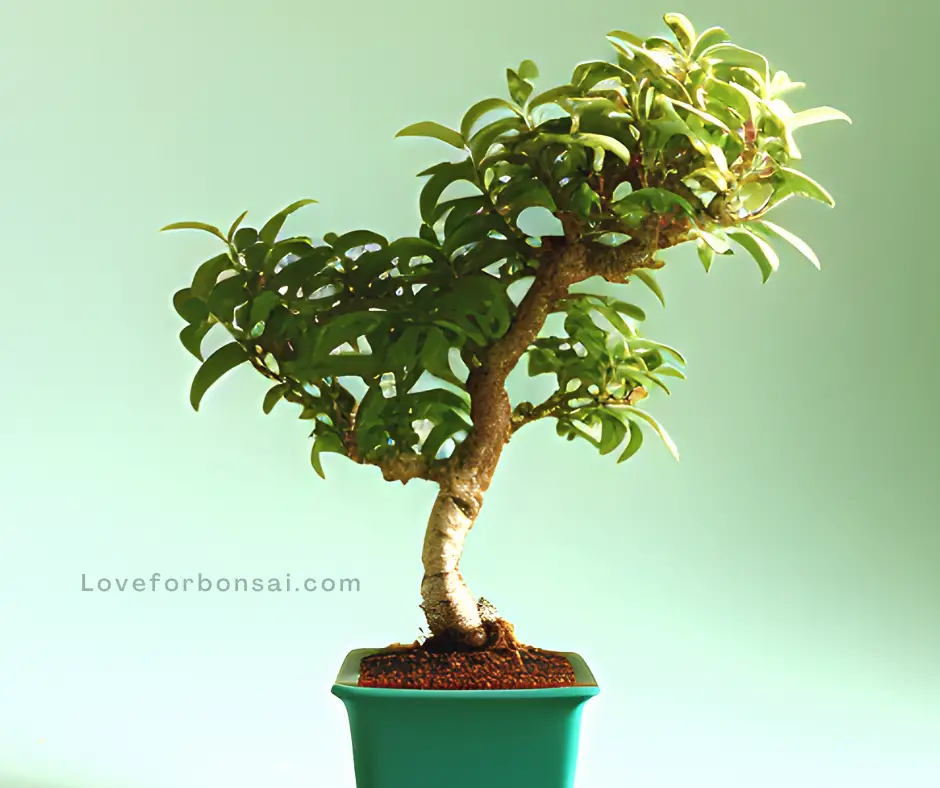
Pruning and Shaping
Pruning and shaping are crucial for creating a beautiful and healthy mango bonsai tree. In pruning, we remove unwanted branches, leaves, and buds to control the growth and appearance of the tree. Shaping involves bending and wiring the branches to create an artistic form.
Why Prune Your Mango Bonsai
- Maintain compact size
- Encourage branching and density
- Improve light penetration
- Enhance fruit production
- Remove diseased/dead wood
Pruning Techniques
Basic Pruning Steps
- Use sharp, sterilized pruning shears
- Remove dead, diseased, or damaged branches
- Cut branches that cross or grow inward
- Thin dense foliage clusters
- Remove excess fruit clusters (thin to 1 fruit per branch)
Best Time to Prune
- After fruiting season (late summer/early fall)
- At least once yearly
- Avoid heavy pruning during flowering
Wiring and Shaping Techniques
Wiring Methods
- Use copper or aluminum wire (appropriate gauge for branch thickness)
- Wrap gently around branches
- Bend gradually into the desired angles
- Check monthly for wire cutting into bark
Styling Styles for Mango Bonsai
- Formal Upright: Straight trunk, symmetrical branching
- Informal Upright: Slight trunk curve, natural appearance
- Slanting: Trunk at a 45° angle
- Cascading: Branches flowing downward (advanced)
Wire Removal Timeline
- Remove after 6 months
- Sooner if the bark begins to thicken around the wire
- Never leave the wire on permanently
Repotting your mango bonsai tree
As your mango bonsai tree grows, it will need more space for its roots and nutrients for its growth.
When to Repot
- Every 2-3 years (spring or summer)
- Signs: Roots circling the pot bottom, slower growth, water running straight through
Repotting Step-by-Step
Materials Needed
- Slightly larger pot (1-2 inches wider)
- Fresh bonsai soil mix
- Pruning shears (sterilized)
- Watering can
Repotting Process
- Water the tree thoroughly 1 day before repotting
- Gently remove the tree from the old pot
- Loosen the root ball carefully
- Trim dead or circling roots (remove 20-30% of roots)
- Place in a new pot with fresh soil
- Fill gaps with soil, pressing gently
- Water thoroughly
- Place in shade for 3-5 days to recover
Post-Repotting Care
- Reduce watering for 1 week
- Keep in indirect light
- Resume normal care after the recovery period
- Don’t fertilize for 4 weeks
You can read more about how to repot a bonsai tree here in this post.
Common Pests and Diseases
Pest Identification and Control
Scale Insects
- Signs: Brown bumps on stems and leaves, sticky residue
- Prevention: Regular inspection, good air circulation
- Treatment: Spray with neem oil or insecticidal soap (weekly for 3 weeks)
Mealybugs
- Signs: White cottony clusters on leaves and stems
- Prevention: Quarantine new plants, maintain humidity
- Treatment: Wipe with alcohol-soaked cotton, spray with neem oil
Spider Mites
- Signs: Fine webbing, yellowing leaves, tiny moving dots
- Prevention: Increase humidity, avoid dry conditions
- Treatment: Spray with water mist, use miticide if severe
Whiteflies
- Signs: Tiny white insects on leaf undersides, yellowing leaves
- Prevention: Good air circulation, yellow sticky traps
- Treatment: Spray with insecticidal soap or neem oil
Disease Prevention and Treatment
Anthracnose (Fungal)
- Signs: Brown spots on leaves and fruit, premature leaf drop
- Prevention: Avoid overhead watering, improve air circulation
- Treatment: Remove infected leaves, spray with fungicide
Powdery Mildew
- Signs: White powder on leaves, stunted growth
- Prevention: Good air circulation, avoid humidity extremes
- Treatment: Spray with sulfur or fungicide, remove affected leaves
Root Rot (Most Serious)
- Signs: Soft stems, musty smell, wilting despite moist soil
- Prevention: Proper drainage, don’t overwater
- Treatment: Repot immediately with fresh soil, trim rotted roots, reduce watering
Inspection Routine
- Check weekly for pests and disease signs
- Inspect leaf undersides
- Monitor soil moisture and smell
- Isolate affected plants immediately
Propagation: Growing New Mango Bonsai Trees
Propagation is the process of growing new Mango Bonsai trees from cuttings or seeds.
Propagation From Cuttings
Best Time and Material
- Take cuttings during the active growing season (spring/early summer)
- Select semi-hardwood branches (not too soft, not too woody)
- Cut 4-6 inches long, with 2-3 leaf nodes
Rooting Process
- Dip cutting in rooting hormone powder
- Plant in rooting medium (50% peat moss, 50% perlite)
- Keep moist but not waterlogged
- Provide bottom heat (70-75°F ideal)
- Roots develop in 4-8 weeks
- Transplant to soil once roots are 1 inch long
Propagation From Seeds
- Use fresh seeds from ripe mangoes
- Follow the seed-growing method from Step 3 above
- Note: Seeds won’t produce identical fruit to the parent tree (genetic variation)
Mango Bonsai Timeline: What to Expect
Year-by-Year Growth Expectations
| Timeline | Milestone |
|---|---|
| Weeks 1-4 | Germination (seed) or adjustment (graft) |
| Months 1-3 | First leaves, root establishment |
| Months 2-6 | Active growth, first pruning opportunity |
| Months 6-12 | Branch development, canopy filling |
| Year 2 | Possible flowering (grafts); continued shaping |
| Year 2-3 | First fruit production (grafts); continued growth (seeds) |
| Year 3-5 | Mature tree form; consistent fruiting (grafts) |
| Year 5+ | Fruit production begins (seeds); established bonsai |
Troubleshooting: Common Problems and Solutions
Problem: No Flowers or Fruit
Possible Causes and Fixes
- Insufficient light: Move to a brighter location (minimum 6 hours direct sun)
- Young tree: Grafts need 1-2 years; seeds need 5-7 years
- Overwatering: Let the soil dry slightly between waterings
- Over-fertilizing: Use balanced fertilizer, not nitrogen-heavy
- Poor pollination: Hand-pollinate with a small brush or keep outdoors for insects
Problem: Yellowing Leaves
Diagnostic Checklist
- Overwatering? Check drainage, reduce frequency
- Nutrient deficiency? Fertilize monthly during the growing season
- Pest infestation? Inspect leaf undersides
- Cold stress? Move away from cold windows/vents
- Low humidity? Mist leaves or use a humidity tray
Problem: Slow Growth or Stunted Tree
Investigation Steps
- Check sunlight (need 6+ hours daily)
- Verify soil drainage (repot if compacted)
- Review watering schedule (too wet or too dry?)
- Inspect for pests and disease
- Confirm temperature range (60-85°F)
- Assess pot size (may need repotting)
Problem: Leaf Drop
Common Causes
- Temperature shock (sudden cold or heat)
- Watering inconsistency
- Pest infestation (spider mites, scale)
- Fungal disease
- Natural dormancy (winter, after fruiting)
Conclusion
Growing a mango bonsai tree is a fun hobby. It mixes the art of bonsai with the joy of growing fruit. This process needs patience, consistency, and care. The reward—a beautiful mini tree that bears tasty mangoes—makes it all worth it.
Start with the right variety and pot, master your watering schedule, and stay vigilant about pests and disease. Within a few years, you’ll have a thriving mango bonsai that becomes a conversation piece and a source of pride.
Ready to begin? Choose your propagation method, gather your supplies, and start your mango bonsai journey today. For more bonsai growing tips, explore our complete bonsai care guides.
Frequently Asked Questions (FAQs):
Can Mango Bonsai trees be grown indoors?
Yes, Mango Bonsai trees can be grown indoors as long as they receive enough sunlight.
Do Mango Bonsai trees require a lot of water?
Mango Bonsai trees require regular watering but should not be overwatered, as this can cause root rot.
How long does it take for Mango Bonsai trees to produce fruit?
Grafted trees: 1-2 years
Seed-grown trees: 5-7 years
Timeline depends on variety, growing conditions, and care quality
Can Mango Bonsai trees be pruned during the growing season?
Light pruning is acceptable during the growing season, but heavy pruning should wait until after fruiting (late summer/early fall) to allow the tree to recover and prepare for dormancy.
Can Mango Bonsai trees be grown from seeds?
Yes, Mango Bonsai trees can be grown from seeds, but it can take several years for them to grow into mature trees.